Discover what a wheel decider is, how a spinning wheel decider works, and why people use an online wheel decider for games, choices, classrooms, and quick yes-or-no decisions.
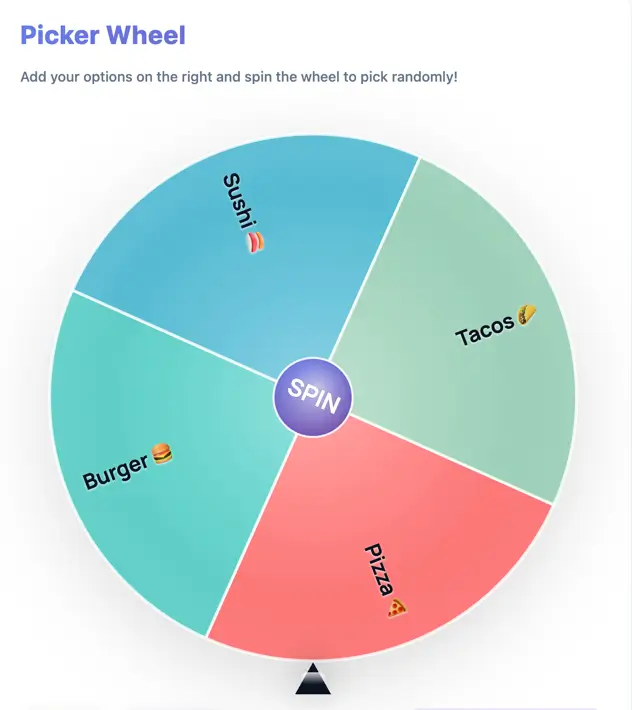
What Is a Wheel Decider?
The idea is incredibly simple, but that is exactly why it works so well. Humans often waste 10, 15, or even 30 minutes on tiny decisions that should take less than 60 seconds. A spinning wheel decider removes that friction by making the process feel fast, fair, and even a little fun. Whether someone is choosing what to eat, what game to play, or which student answers first, the wheel creates an instant result with no endless debate.
A lot of users also like the visual side of the tool. Watching a colorful wheel spin feels more engaging than clicking a plain randomizer button or using a static list generator. Because of that, the spin wheel decider has become popular not only for personal use, but also for classrooms, online meetings, social media content, and casual entertainment. It is a simple tool, but it solves a very real modern problem: too many options and too little focus.
How Does a Wheel Decider Work?
Most wheel tools follow the same basic structure. You enter a set of choices into the wheel, such as 5 dinner ideas, 8 names, 10 school topics, or even 2 simple answers like “yes” and “no.” After that, you click a button to spin it, and the system uses a random selection method to stop on one section. This is why many users refer to it as a random wheel decider, because the final outcome is not manually chosen by the person using it.
The process feels almost physical, even though it is digital. A good online wheel decider imitates the motion of a real prize wheel, complete with spinning speed, ticking sounds, and a suspenseful stop. That little bit of animation matters more than it seems. People tend to trust and enjoy tools more when the result feels visible and transparent rather than hidden behind a blank algorithm.
In many cases, the wheel can also be customized. Users may change colors, add or remove entries, adjust the number of options, and even save their wheels for future use. This flexibility is one of the reasons the wheel decider online format became more popular over the last few years. Instead of being limited to one type of decision, the same tool can be used for work, study, fun, and content creation with almost no learning curve.
Why People Use a Wheel Decider
The main reason people use a wheel decider is that it reduces hesitation. Even when the choice is small, the brain often turns it into a bigger problem than it really is. Picking between 6 movie titles or 4 lunch ideas should not drain energy, yet people do this every day. A spin a wheel decider gives a clean answer in seconds and prevents decision fatigue from building up across the day.
Another reason is fairness. In a group setting, people do not always trust each other to choose neutrally. A teacher choosing which student presents first may seem biased, even when they are not. A manager assigning a small task might face similar reactions. In those situations, a spinning wheel decider creates a visible and random method that feels more objective to everyone involved.
There is also the entertainment factor. Some tools become useful simply because they make an ordinary action more enjoyable. A wheel decider turns routine selection into a mini-event, and that extra engagement can matter in classrooms, parties, streams, and team calls. It is not just about the answer itself. It is about making the process more interactive, especially in settings where attention tends to disappear after about 8 seconds, which, frankly, is a very human achievement.
Common Uses of a Wheel Decider
A wheel decider can be used in surprisingly many situations. For personal life, it helps with daily choices like what to cook, what show to watch, where to go, or what task to do first. For work, it can assign prompts, select topics, or add energy to meetings. For education, it is often used to choose students, vocabulary words, discussion questions, or classroom rewards.
One especially popular version is the yes or no wheel decider. This format is useful when the user does not need 12 complex options and only wants a fast binary answer. People use it for playful questions like “Should I order dessert?” or “Do I go out tonight?” Of course, it should not be used for serious life decisions involving money, health, contracts, or relationships, because letting a spinning circle run your life is an efficient route to nonsense.
| Type of wheel | Typical number of options | Common use case |
|---|---|---|
| Yes or No Wheel | 2 | Quick binary decisions |
| Name Picker Wheel | 5-30 | Choosing a person fairly |
| Topic Wheel | 6-20 | Classroom or brainstorming prompts |
| Reward Wheel | 4-12 | Games, incentives, and challenges |
| Random Choice Wheel | 3-20 | Food, movies, activities, or tasks |
This table shows why the tool is so adaptable. A random wheel decider is not tied to one audience or one purpose. The same mechanic can be used by a student, a parent, a teacher, a content creator, or a small team lead. That kind of flexibility is exactly what keeps simple tools alive online while more complicated apps vanish after 3 months of hype and inflated promises.
What Makes an Online Wheel Decider So Popular?
The rise of the online wheel decider is closely tied to convenience. People want tools that work instantly, do not require installation, and can be opened on a phone or laptop in 5 seconds. A browser-based wheel gives exactly that. You type, spin, and get a result without needing technical knowledge, registration, or a tutorial that feels longer than the task itself.
Another major reason is shareability. A wheel decider online works well in classrooms, video calls, livestreams, and social posts because the action is easy to understand visually. Even if someone has never used the tool before, they understand the concept the moment the wheel starts spinning. That makes it useful in environments where you need quick participation and do not have time to explain every feature.
The emotional appeal also matters. Humans are oddly drawn to suspense, even in tiny situations. When a spin wheel decider slows down and clicks toward the final result, it creates a small moment of anticipation that a standard random number generator cannot match. That tiny moment is enough to make the tool feel more engaging, and sometimes that is all a product needs to become part of daily use.
Wheel Decider vs Other Random Choice Tools
A wheel decider is not the only decision-making tool online. People also use coin flips, random number generators, dice rollers, and list randomizers. However, a spinning wheel decider often feels more personal and flexible than those alternatives. You can see all options at once, customize them, and enjoy the process instead of just receiving a plain output.
That visual format makes a difference when multiple people are involved. A random number tool may technically do the same job, but it lacks the sense of transparency and excitement that a wheel provides. If 10 people are watching a result together, a spin a wheel decider feels more social and interactive. It transforms a silent calculation into a shared moment.
There is also a psychological reason for its popularity. A wheel gives users the illusion of ceremony, and ceremony makes even a simple choice feel more meaningful. That does not mean the tool is smarter than other randomizers. It means it is better at delivering the result in a way people enjoy and accept more easily.
Best Situations to Use a Wheel Decider
A wheel decider works best when the choice is low-risk and the user wants speed, fairness, or fun. It is ideal for picking names, planning small tasks, choosing prompts, deciding between casual options, or adding game-like energy to a routine activity. In these cases, the wheel saves time and reduces unnecessary back-and-forth. Instead of discussing the same 7 options for 20 minutes, the group can move forward immediately.
- choosing classroom participants
- selecting lunch ideas
- picking game challenges
- assigning simple team tasks
- generating content prompts
- deciding between casual weekend activities
- using a yes or no wheel decider for harmless everyday questions
Even then, context matters. A random wheel decider is a tool for light and moderate decisions, not a replacement for judgment. It can help with speed, but it cannot weigh consequences, emotional nuance, or long-term priorities. People sometimes confuse randomness with wisdom, which is a bold and deeply unnecessary mistake.
Can a Wheel Decider Actually Help with Decision Fatigue?
In many small situations, yes. Decision fatigue happens when a person makes too many choices over the course of a day and gradually loses mental sharpness. It does not only affect major decisions. Tiny repeated questions like what to wear, eat, watch, or do next can slowly drain focus. A wheel decider helps by outsourcing minor choices and preserving mental energy for decisions that actually deserve analysis.
This is especially useful for people who work online, study remotely, or manage several small tasks at once. When there are 12 things competing for attention, even choosing where to start can feel annoying. A spin wheel decider cuts through that clutter and creates movement. Once the wheel gives an answer, the user stops hovering and begins.
Still, it should be used intelligently. A tool can reduce friction, but it cannot solve a deeper lack of structure. If someone uses a wheel decider online for every part of life, the real issue may not be choice overload but poor systems. The wheel is useful when it supports action, not when it becomes a decorative substitute for thinking.
Final Thoughts on What a Wheel Decider Is
A wheel decider is a simple digital tool that turns random selection into a visual and engaging experience. It helps users make quick decisions, create fair outcomes, and add fun to ordinary choices. Whether someone uses a spinning wheel decider in a classroom, during a team call, for personal planning, or just to break a tie between 2 or 10 options, the appeal is easy to understand. It is quick, accessible, and far more entertaining than staring at a list while pretending that somehow the answer will magically reveal itself.
The popularity of the online wheel decider comes from this mix of function and simplicity. It does not try to be overly smart, and that is part of its strength. A random wheel decider gives you a result, removes hesitation, and keeps things moving. In a digital world filled with bloated tools and complicated systems, sometimes a colorful wheel with 8 choices does a better job than an app with 40 features nobody asked for.