Learn how to use a picker wheel in a natural, practical way for names, ideas, tasks, and everyday choices, with tips for getting better results from a random wheel.
How to Use a Picker Wheel Without Overcomplicating Simple Choices
A lot of people first discover a wheel picker when they need a fair way to choose between several people or ideas. Teachers use it for class participation, creators use it for content prompts, and teams use it when nobody wants to be the one making the final call. In those moments, the wheel does more than pick something. It removes friction. Instead of wasting 15 minutes pretending to discuss options thoughtfully when everyone is already tired, the wheel gives the group a clear answer and lets them move on.
That is also why so many people search for what is a picker wheel in the first place. They are not usually looking for some complicated technical system. They are looking for something fast, simple, and neutral enough to feel fair. A random wheel works because it turns indecision into action, and in daily life that is often more useful than people expect.
What a Picker Wheel Actually Does
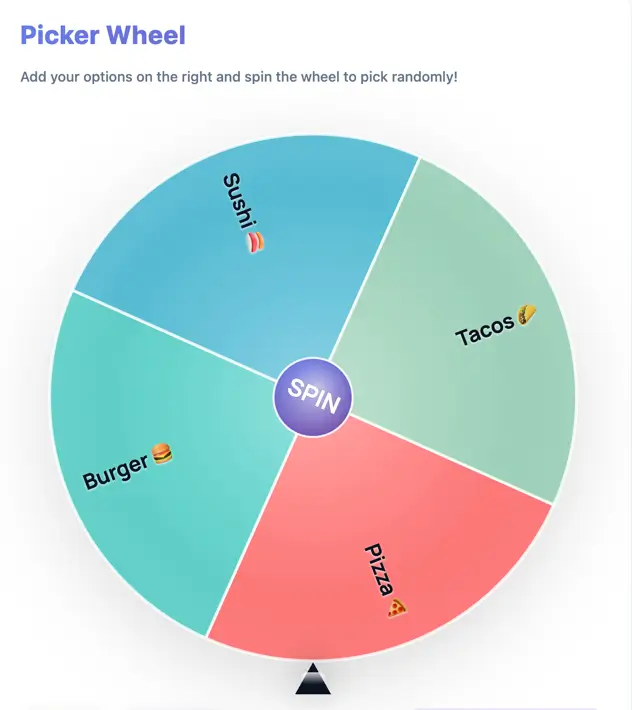
A picker wheel is a digital wheel divided into sections, and each section represents one possible result. When you spin it, the wheel rotates, slows down, and eventually lands on a single entry. The mechanics are simple, but the appeal goes a bit deeper than that. People trust processes they can see, and a spinning wheel feels more transparent than a silent button that instantly spits out one answer.
That matters more in group situations than in solo ones. If you are choosing privately between 4 lunch ideas, it probably does not matter whether you use a wheel or a list randomizer. But if you are selecting from a wheel of names in front of 20 people, the visual process becomes part of the value. Everyone watches the same thing happen, and that shared moment makes the outcome easier to accept.
There is also a small emotional reason the tool works so well. A spin takes a few seconds, and those few seconds create anticipation. That sounds minor, but it changes the mood of the decision. A tool that could feel mechanical suddenly feels engaging, and that is why a random name picker or simple topic wheel can hold attention much better than a plain list.
Why People Use Picker Wheels So Often
The most obvious reason is speed. Modern life is full of tiny choices that really do not deserve as much energy as we give them. People hesitate over tasks, dinner ideas, order of presentation, content topics, or who goes first in a game. None of these are life-changing decisions, but they still consume attention. A picker wheel helps because it shortens the gap between uncertainty and action.
The second reason is fairness, or at least the appearance of fairness. In schools, team settings, and even families, people do not always like being chosen manually. Someone may assume bias even when none exists. A wheel picker is useful because it takes the pressure off the person making the call and shifts it onto a visible process. It does not solve every complaint, because people can complain about absolutely anything, but it does make the method easier to defend.
The third reason is that it makes routine decisions feel less dull. A random wheel adds motion and suspense to something that would otherwise be flat. That is especially useful in environments where attention disappears quickly, like online classes, remote meetings, or livestreams. Sometimes the wheel is not just selecting an answer. Sometimes it is rescuing the mood.
How to Start Using a Picker Wheel
Using a picker wheel usually begins with one very basic step: entering your options. Those options might be 2 answers, 8 names, 10 writing prompts, or 12 tasks. Once they are added, the wheel turns each entry into a segment, giving you a visual map of all available choices. That is part of what makes the tool feel intuitive even for someone using it for the first time.
After that, most people adjust the wheel a little before spinning. They may reorder entries, remove options they do not need, or add duplicates if they want one result to appear more often. Some people also change colors, not because color is essential, but because clarity matters once the wheel starts getting crowded. A well-organized wheel is easier to read, easier to trust, and much more pleasant to use.
Then comes the simplest part: spinning it. Once the wheel starts moving, your role is mostly over. You wait, the wheel slows down, and one option is selected. That clean finish is the reason the tool works so well. There is no long process, no confusing interface, and no unnecessary friction between setup and result.
When a Wheel of Names Works Best
One of the most practical uses for a picker wheel is building a wheel of names. This works well in classrooms, workshops, games, contests, team activities, or anywhere one person needs to be selected from a group. In those situations, the wheel saves time, avoids awkwardness, and creates a result that feels visible enough to be accepted without much resistance.
A random name picker is especially helpful when the group is large. Choosing one person out of 3 is easy enough manually, but choosing one out of 18, 25, or 40 can feel messy. The wheel simplifies that instantly. It takes a long list, turns it into one visual system, and resolves the choice in a matter of seconds.
There is also a practical benefit to using a random name picker wheel online instead of writing names on paper or improvising a method each time. The online version can be reused, edited, and spun again without rebuilding everything from scratch. If you need multiple rounds of selection, that convenience matters. Over the course of one event or lesson, it can easily save 5 to 10 minutes, which is more than enough to justify using it.
Using a Picker Wheel for Everyday Decisions
A picker wheel is not only for names or public activities. In everyday life, it can be surprisingly useful for small personal decisions that keep getting delayed for no good reason. It can help choose what to cook, what workout to do, which task to start first, which content idea to film, or which item to review next. These are small choices, but they tend to pile up and drain focus if you make them one by one.
This is where the random wheel becomes more than a novelty. It becomes a shortcut around indecision. If all the options on your list are already acceptable, then the real problem is not quality but hesitation. A picker wheel solves hesitation by replacing endless internal debate with a visible result. That is not laziness. It is often just better energy management.
Still, the logic only works when the options are genuinely acceptable. That is the point many people miss. A wheel picker is useful when you have several decent choices and do not want to waste time ranking them. It is far less useful when the choices are unequal and require actual evaluation. Randomness is helpful for reducing friction, not for replacing judgment.
How to Make a Picker Wheel More Useful
The quality of the result depends heavily on the quality of the entries. That sounds obvious, but it is where many bad wheel experiences begin. If your options are vague, repetitive, or uneven, the wheel can only reflect that confusion back to you. A good picker wheel starts with a clean list where each entry is distinct, readable, and relevant to the decision you are trying to make.
It also helps to keep the wheel readable. A list of 6 to 12 entries usually works comfortably for most purposes, though more is possible if the labels stay short. Once the wheel becomes too crowded, the visual advantage starts to disappear. If nobody can read the options properly, then the wheel loses one of its main strengths. A random wheel should simplify the decision, not make the screen look like chaos in circular form.
Another useful trick is repetition. If you want one idea or one type of result to appear more often, repeating the entry on the wheel can shift the balance. That is not the same as pure equal probability, of course, but sometimes equal weighting is not what you want. The point is that a wheel picker can be flexible when used intentionally. It becomes weak only when people throw random inputs into it and expect structure to appear on its own.
Features That Usually Matter Most
Different wheel tools come with different settings, but most users benefit from the same few features. The strongest ones are basic text editing, color adjustments, reordering, duplicating, and deleting entries. These are not flashy features, but they directly improve usability. In simple tools, the boring features are often the important ones.
| Feature | What it helps with | Why it matters |
|---|---|---|
| Edit entries | Replaces default text with your own options | Makes the wheel specific and relevant |
| Reorder items | Changes how options appear in the list | Helps organize names, prompts, or tasks |
| Duplicate entries | Adds repeated options | Useful when one result should appear more often |
| Delete items | Removes extra or unwanted choices | Keeps the wheel focused and clean |
| Color changes | Improves segment visibility | Makes crowded wheels easier to read |
| Spin again quickly | Repeats the process without rebuilding the wheel | Saves time in classes, games, or meetings |
The reason these features matter is that they support clarity rather than distraction. A good tool should help you build a better list and get to a result faster. What usually does not help is over-customizing the wheel until it becomes more about decoration than function. That may look entertaining for 20 seconds, but it weakens the tool if it makes the decision harder to follow.
Mistakes People Make When Using a Random Wheel
The biggest mistake is using the wheel for the wrong kind of decision. A picker wheel is excellent for low-stakes choices where all outcomes are more or less acceptable. It is not a serious framework for legal, medical, financial, or long-term personal decisions. That may sound obvious, but people love turning convenient tools into substitutes for thinking, which is rarely a smart exchange.
Another common mistake is putting weak inputs into the system. If one option says “Project A,” another says “Maybe that idea from yesterday,” and another says “Something easy,” the wheel may still function, but the result will be sloppy. A random name picker or topic wheel works best when the items are clearly defined and roughly comparable. Otherwise, the issue is not randomness. The issue is the list.
A third mistake is confusing speed with strategy. A wheel helps you move quickly, but moving quickly is only useful when you are moving in a reasonable direction. That is why it helps to ask one question before spinning: “Would I be okay with any of these outcomes?” If the answer is no, then the wheel is probably the wrong tool for that situation.
Smart Ways to Get Better Results
The easiest way to improve your outcomes is to build better wheels. Keep the wording short, make the entries comparable, and remove anything you would not genuinely want to land on. That one habit already makes the tool more useful. A good wheel does not need 25 clever settings. It needs a clean list and a clear purpose.
It also helps to match the wheel to the situation. A wheel of names works best when fairness and visibility matter, while a smaller personal wheel works best when you are trying to cut down on tiny daily decisions. A random name picker wheel online is especially strong when several people need to see the process at once. In other words, the tool becomes more effective when you choose the format strategically instead of treating every wheel like the same thing.
The strong part of these habits is that they make the outcome feel cleaner and more credible. The weak part is that they still depend on the user being honest about the quality of the options. A picker wheel can accelerate a decision, but it cannot fix a bad set of choices.
Final Thoughts
Using a picker wheel is simple in the best possible way. You enter your options, adjust them if necessary, spin the wheel, and let it choose one result. That process works because it combines visibility, speed, and enough randomness to feel fair. Whether you are exploring picker wheel, building a wheel of names, or testing a random name picker for group activities, the tool is most useful when the stakes are low and the inputs are clear.
The real value of a wheel picker is not that it makes perfect decisions. It is that it helps you stop wasting energy on decisions that do not need endless analysis. A random wheel is best used as a momentum tool. It gets you moving, reduces hesitation, and keeps small choices from expanding into unnecessary drama. For something built around a spinning circle, that is a pretty solid return.