Learn what a spinner wheel is, how an online wheel spinner works, and why people use spinner wheels for games, classrooms, decisions, and random choice selection.
What Is a Spinner Wheel?
The appeal of a spinner wheel is not just about randomness. It also turns a basic decision into something visual and interactive, which makes people more willing to engage with it. Choosing between several ideas from a list can feel dull, but watching a colorful wheel spin for a few seconds adds suspense and energy.
A modern online wheel spinner works particularly well because it removes friction from the process. Instead of writing names on paper or trying to invent a fair system, users can open a browser, type in 4, 8, or 20 options, and get an instant result. It solves a very ordinary problem: too many options, too little certainty, and not enough patience.
How a Spinner Wheel Works
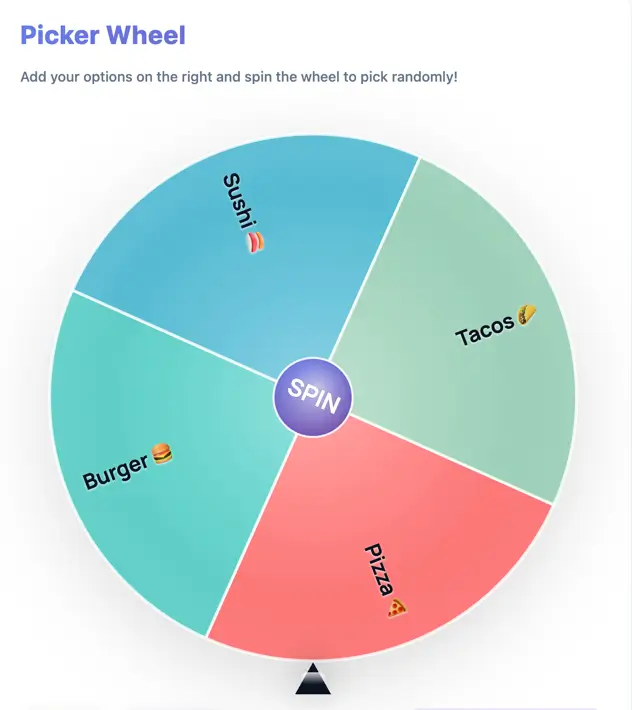
A spinner wheel works by assigning each option its own section on a circle. Once the user clicks or taps to spin, the wheel rotates and slows down until a pointer lands on one of the sections. The result is then displayed as the chosen answer, making the tool feel both random and transparent.
In digital versions, the system is usually powered by a randomizing mechanism that determines where the wheel will stop. The motion is designed to imitate a real spinning object, often with sound effects, visual movement, and gradual slowdown. This makes the experience feel more physical, even though everything happens on a phone or laptop screen.
This structure is also why people often prefer a spinner wheel to a plain random number generator. A number tool may produce the same function in technical terms, but it does not create the same level of engagement. When people spin the wheel, they can see every option, follow the movement, and witness the result as it happens.
Why Spinner Wheels Became So Popular
The popularity of the spinner wheel grew because it combines 3 useful things at once: speed, fairness, and entertainment.
- Speed: a person who wastes 15 minutes trying to decide between dinner options, study tasks, or video ideas can use a wheel spinner and move forward in under 30 seconds.
- Fairness: a random wheel spinner avoids tension by showing an impartial result that everyone can watch together.
- Entertainment: spinner wheels are simply more enjoyable than static tools, which makes people more likely to participate.
That is why an online wheel spinner often appears in educational content, livestreams, workshops, and games. Even when the decision itself is minor, the act of spinning adds enough excitement to keep attention alive.
Common Uses of a Spinner Wheel
A spinner wheel can be used in far more situations than most people expect. In education, it helps teachers choose students, assign speaking turns, review vocabulary, or introduce random writing prompts. In family or personal life, it can be used for deciding what to eat, what movie to watch, what chore to do first, or what weekend activity to try. In work settings, it can support brainstorming, meeting participation, and simple task selection.
One reason the wheel spinner remains relevant is that it adapts easily to different contexts. A wheel with 2 options may answer a yes-or-no question, while a wheel with 12 options may be perfect for game challenges or content ideas.
| Spinner wheel type | Typical number of entries | Main purpose |
|---|---|---|
| Yes or No Spinner | 2 | Fast binary choices |
| Name Picker Wheel | 5–30 | Fair selection of people |
| Topic Spinner | 6–20 | Prompts for school or work |
| Reward Wheel | 4–12 | Games, prizes, motivation |
| Activity Wheel | 5–15 | Daily plans and casual choices |
This variety explains why the concept remains useful year after year. A spinner wheel is not limited to one age group, one industry, or one type of decision. It can be playful, educational, or functional depending on how the user builds it.
Spinner Wheel in Digital Form
The digital version of a spinner wheel has made the concept much more accessible. In the past, people relied on cardboard wheels, classroom props, or handmade paper spinners. Those still work, but they take more time to prepare and offer less flexibility once they are built.
A modern online wheel spinner can be customized in 20 seconds, reused instantly, and edited whenever the list of options changes. Open the page, enter the choices, press spin, and the task is done. It is efficient, visual, and easy enough for almost anyone to understand within the first 10 seconds.
Another benefit of digital use is shareability. A spinner wheel can be displayed during a remote class, projected in a meeting, or shown during a livestream without extra equipment. This makes the random wheel spinner especially useful in online environments where visual interaction matters more than ever.
Spinner Wheel vs Other Random Choice Tools
A spinner wheel is only one of several random selection tools available online. Others include coin flips, dice rollers, numbered randomizers, shuffled lists, and automated pickers. Each of these can be useful, but they do not all create the same experience.
That visual process adds trust, especially in group settings where fairness matters. When people spin the wheel, they are not only waiting for an answer. They are also watching the method.
Benefits of Using a Spinner Wheel
- Reduces decision fatigue: offloading a handful of small choices to a spinner wheel can save mental energy for more important work.
- Increases participation: motion and uncertainty pull attention back in classrooms, meetings, and games.
- Creates visible fairness: the wheel does not know who is shy, loud, popular, late, or annoying. It just lands where it lands.
The benefits of using a spinner wheel go beyond simple randomness. It makes routine choices less dull and creates a moment that everyone follows together. That is surprisingly useful in any environment where attention disappears faster than common sense.
When a Spinner Wheel Is Most Useful
A spinner wheel is most useful when the choice is real but the consequences are relatively low. It works well for games, prompts, routines, classroom turns, content themes, small rewards, and casual personal decisions. If someone cannot choose between 8 recipe ideas or 6 workout options, a spinner wheel is a fast and effective solution.
It is also especially helpful in group situations. A teacher with 25 students, a host managing 10 game participants, or a team lead sorting through 7 possible topics can all benefit from a visual randomizer. An online wheel spinner gives structure without requiring long explanation.
The tool becomes less useful when decisions require judgment, ethics, or deeper evaluation. Choosing a discussion topic with a wheel is practical. Choosing a serious financial commitment, legal action, or relationship move with a spinner is reckless nonsense dressed up as convenience.
Practical Ways People Use Spinner Wheels
People use spinner wheels in many everyday scenarios, and the variety is part of the reason the tool keeps growing in popularity. Some use it for home routines, others for work structure, and others just for fun.
- picking a student in class
- choosing a lunch option
- assigning a light task
- selecting a content topic
- deciding on a game challenge
- creating a random prize moment
- organizing family activities
- narrowing down simple choices when overthinking starts wasting time
That list shows how broad the tool’s appeal really is. The spinner wheel succeeds because it solves a common problem without demanding much from the user. There is no steep learning curve, no advanced setup, and no need to explain the concept twice.
Final Thoughts on What a Spinner Wheel Is
A spinner wheel is a simple but effective tool that uses random selection to make choices easier and more engaging. It can be physical or digital, though the online wheel spinner has become especially popular because it is fast, customizable, and easy to use across devices. Whether someone needs a fair way to choose from 5 names, 10 prompts, or 2 quick options, a wheel spinner turns that process into something clear and interactive.
Its popularity comes from the fact that it solves several problems at once. It reduces hesitation, increases fairness, and makes routine choices feel less dull. A random wheel spinner is not magical, and it does not replace actual judgment, but it works extremely well for everyday situations where speed and neutrality matter more than analysis.